What Is an Export Declaration Form (EDF)? Meaning, Purpose, Process and Requirements in India
2026-10-24
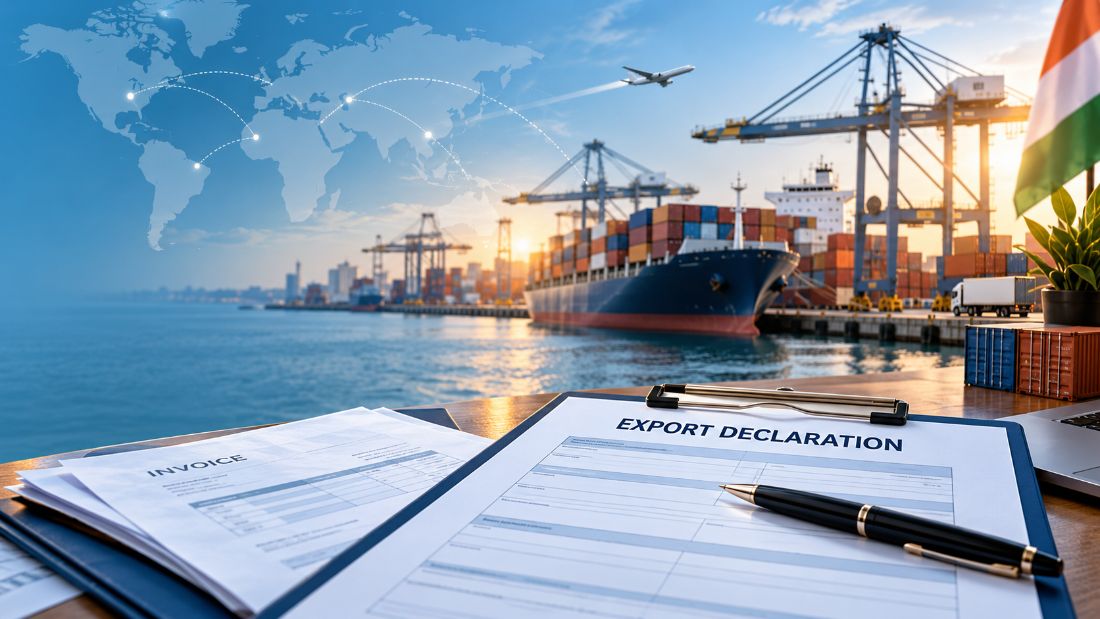
An Export Declaration Form (EDF) is an official declaration used to report the value and details of goods or services exported from India. It helps establish a record of export transactions and supports compliance with India's foreign exchange regulations.
The Reserve Bank of India (RBI) regulates export declarations under the Foreign Exchange Management Act (FEMA). From 1 October 2026, the Foreign Exchange Management (Export and Import of Goods and Services) Regulations, 2026 introduced a unified framework for export declarations covering goods, services and software. This change is particularly important for freelancers, digital service providers, software businesses and other Indian professionals earning money from overseas clients.
In this guide, we explain what an EDF is, why it is required, who needs to file it, what information it contains and how the filing process works.
What Is an Export Declaration Form?
An Export Declaration Form is a regulatory document used to declare the full export value of goods or services supplied to customers outside India.
The form records essential transaction information, such as the exporter's details, overseas recipient, description of the export, invoice value, currency and expected payment arrangements.
Under the RBI's 2026 export regulations, exporters must submit the declaration to the authority specified for their type of export. The applicable authority depends on whether the transaction involves physical goods, services or software.
For example, an Indian manufacturer exporting machinery to Germany needs to comply with the declaration requirements applicable to goods exports. Similarly, an Indian freelance designer providing services to a client in the United States may need to comply with the service-export EDF requirements that took effect on 1 October 2026.
The EDF is a regulatory declaration. It is not the same as an export invoice, shipping bill, bank statement or foreign inward remittance certificate.
Why Is an Export Declaration Form Important?
The EDF serves several important purposes in India's export compliance framework.
1. Declaring export value
The form records the value of goods or services exported to a foreign customer. This creates a formal declaration of the transaction.
2. Supporting foreign exchange compliance
Indian exporters must comply with applicable FEMA requirements concerning export transactions and the receipt of export proceeds. The EDF supports the documentation and monitoring of these transactions.
3. Helping banks monitor export payments
Authorised Dealer (AD) banks, which are banks authorised to deal in foreign exchange, play an important role in monitoring export transactions. Export declarations and associated records help them reconcile export values with payments received from overseas customers.
4. Maintaining business records
The declaration helps exporters maintain consistent records of their invoices, export values and foreign receipts. These records may also be useful when responding to questions from a bank, accountant or regulatory authority.
5. Supporting digital and service exports
The 2026 framework extends the EDF system to service exports, including software. This is especially relevant for Indian professionals and businesses earning foreign income through digital services.
Who Needs to File an EDF in India?
The requirement depends on the nature of the export and the rules applicable to the transaction.
1. Exporters of physical goods
Businesses exporting products such as clothing, jewellery, electronics, machinery, handicrafts and other merchandise must follow the applicable goods-export declaration process.
For exports through an Electronic Data Interchange (EDI) customs port, the EDF is deemed to be submitted as part of the shipping bill. Other applicable procedures depend on the port and the authority handling the shipment.
2. Freelancers working with international clients
Indian freelancers providing services to overseas clients should review the EDF requirements effective from 1 October 2026.
Examples include:
Graphic designers
Web developers
Content writers
Digital marketing professionals
Video editors
Consultants
Online business service providers
A freelancer's exact reporting obligations depend on the nature of the service, invoicing arrangement and applicable regulatory provisions.
3. YouTubers and digital creators
Indian YouTubers and other digital creators may receive overseas income through advertising revenue, sponsorships, licensing, subscriptions or other commercial arrangements.
However, receiving money from a foreign platform does not automatically mean that every payment qualifies as an export of services in the same way. The underlying contractual arrangement, recipient, nature of the activity and payment structure must be examined.
Creators should determine whether their particular income constitutes an export of services under the applicable regulations before filing an EDF.
4. Software companies and IT service providers
Businesses providing software development, programming, technical support, cloud-related services and other qualifying software services must review the unified EDF requirements.
The 2026 framework replaces the earlier separate SOFTEX reporting framework with a unified export declaration system, subject to the applicable provisions and implementation procedures.
5. Indian businesses providing services overseas
Consultants, agencies, professional service firms and other businesses serving international customers should also review their obligations under the new regulations.
Important: EDF filing requirements should not be determined solely by whether a person receives money in foreign currency. The nature of the transaction and the applicable rules matter.
What Information Is Required in an EDF?
The information required depends on the prescribed form and the nature of the export. Common information that an exporter should prepare includes the following.
| Information | Purpose |
|---|---|
| Exporter's name and address | Identifies the person or business making the export |
| PAN and other applicable identification details | Supports identification and verification |
| IEC, where applicable | Identifies an exporter under the relevant trade procedures |
| Overseas customer's details | Identifies the foreign recipient |
| Invoice number and date | Links the declaration to the commercial transaction |
| Description of goods or services | Explains what was exported |
| Export value | Records the declared value of the transaction |
| Currency | Identifies the currency in which the export is invoiced |
| Payment terms | Records relevant information about the expected payment |
| Bank details, where required | Supports the applicable foreign exchange reporting process |
| Supporting documentation | Helps substantiate the declaration |
This is a preparation checklist, not a substitute for the prescribed EDF. Not every field applies to every exporter, and the official form may require additional information.
How to File an Export Declaration Form
The process differs for physical goods and service exports. The following steps provide a general overview.
Step 1: Identify the type of export
Determine whether the transaction involves physical goods, software or other services.
This distinction is important because the designated authority and submission procedure may differ.
Step 2: Prepare the commercial documentation
Gather the relevant documents, such as:
Export invoice
Purchase order or service agreement, where applicable
Customer details
Description and value of the export
Currency and payment terms
Shipping documents for physical goods, where applicable
Relevant bank or payment records
Step 3: Identify the designated authority
Under the 2026 regulations, the specified authority generally depends on the export category:
Goods: The Commissioner of Customs in the Domestic Tariff Area or the Development Commissioner of the relevant Special Economic Zone, as applicable.
Services other than software: The Authorised Dealer in the Domestic Tariff Area or the relevant SEZ authority.
Software: The Authorised Dealer or Software Technology Parks of India (STPI) in the Domestic Tariff Area, or the relevant SEZ authority.
The applicable route should be confirmed for the particular transaction.
Step 4: Complete the EDF accurately
Enter the information required by the prescribed form. Ensure that the declared export value and supporting information are consistent with the relevant commercial documents.
Avoid inventing missing information or using estimates without an appropriate basis.
Step 5: Submit within the applicable deadline
The deadline depends on the type of export.
For physical goods, the declaration is generally required at the time of export, with the prescribed treatment for exports through EDI ports.
For services, the 2026 regulations generally require an EDF within 30 days from the end of the month in which the invoice is raised. A single EDF may cover multiple service exports during the same month. Exporters of services other than software may also submit the EDF on or before the date of receipt of payment, subject to the applicable provisions.
Step 6: Retain the records
Keep a copy of the declaration, invoice, supporting documents and relevant payment records. Follow any additional instructions issued by the designated authority or AD bank.
EDF Filing Deadline for Service Exports
The 2026 regulations introduced a specific filing timeline for service exporters.
The general deadline is within 30 days from the end of the month in which the invoice is raised.
For example, if a qualifying service-export invoice is issued on 12 October 2026, the general EDF filing deadline would be 30 November 2026.
A single declaration may cover multiple qualifying service exports invoiced during the same month, subject to the prescribed requirements. For services other than software, the alternative submission timing on or before receipt of payment may also be available.
The Authorised Dealer may extend the filing period when the exporter requests an extension, explains the delay and the bank is satisfied that the request is reasonable.
Exporters should confirm the latest procedures with their AD bank, particularly when dealing with amendments, delayed invoices or unusual payment arrangements.
EDF vs Shipping Bill vs SOFTEX
These terms are related to export documentation, but they are not interchangeable.
| Document | Main purpose |
|---|---|
| Export Declaration Form (EDF) | Declares export value under the applicable FEMA framework |
| Shipping bill | Customs document used for the clearance and shipment of goods |
| SOFTEX | Earlier separate declaration framework for qualifying software exports, replaced under the unified 2026 framework |
| Export invoice | Commercial document showing the goods or services supplied and the amount charged |
| Foreign inward remittance advice or bank credit advice | Evidence of a payment received from abroad, depending on the document issued |
For goods exported through an EDI customs port, the EDF is deemed to be submitted as part of the shipping bill. Service exporters, on the other hand, should review the applicable EDF procedure rather than assume that a shipping bill is relevant to their transaction.
Do Freelancers and YouTubers Need an EDF?
This is an important question for Indian individuals earning money online from foreign sources.
From 1 October 2026, the EDF framework includes exports of services. Consequently, Indian freelancers and businesses providing qualifying services to foreign customers should review the new reporting requirements.
However, not every overseas receipt is automatically an export of services. For example, advertising revenue, royalties, platform payouts, affiliate commissions and sponsorship payments may involve different contractual and commercial arrangements.
Before deciding whether an EDF is required, consider:
What activity generated the income?
Who is contractually purchasing or paying for the service?
Is the transaction an export of services under the applicable regulations?
What invoice or other commercial documentation supports the payment?
Which authority is responsible for receiving the declaration?
A creator or freelancer should not assume that a payment is exempt merely because the payer is a foreign platform. Equally, a foreign bank credit alone is not sufficient to conclude that an EDF must always be filed.
Where the classification is unclear, obtain advice from an appropriately qualified professional or the relevant AD bank.
Common Mistakes to Avoid
Exporters should pay attention to the following issues:
Incorrect export value: Ensure the declared amount is supported by the underlying transaction documents.
Missed deadlines: Track the applicable filing deadline for every relevant invoice or shipment.
Incorrect customer details: Verify the overseas recipient's name and other required information.
Confusing payment evidence with an EDF: A bank credit advice does not automatically replace a required declaration.
Using outdated forms: Check that the form and procedure are current under the 2026 framework.
Assuming all foreign income has the same classification: Different contractual arrangements can produce different compliance outcomes.
Ignoring bank instructions: AD banks may require supporting documentation or corrections to reconcile an export entry.
Accurate documentation and timely communication with the designated authority can reduce avoidable compliance issues.
Frequently Asked Questions (FAQs)
1. What does EDF stand for?
EDF stands for Export Declaration Form. It is used to declare export information and export value under India's applicable foreign exchange regulations.
2. Is EDF mandatory in India?
The applicable regulations require EDF declarations for goods and services, subject to the specific provisions and procedures. The treatment depends on the type of export and the designated authority.
3. Is EDF required for service exports?
From 1 October 2026, service exports fall within the unified EDF framework. Exporters should check whether their specific activity qualifies as an export of services and follow the prescribed procedure.
4. What is the EDF deadline for freelancers?
For qualifying service exports, the general deadline is within 30 days from the end of the month in which the invoice is raised. The applicable provisions include an alternative timing for services other than software.
5. Can one EDF cover multiple invoices?
Yes. Under the 2026 regulations, an exporter of services may submit a single EDF covering qualifying exports to one or more recipients during a month, subject to the applicable requirements.
6. Is EDF the same as SOFTEX?
No. SOFTEX was a separate reporting framework for qualifying software exports. The 2026 regulations introduced a unified EDF framework that includes software.
7. Is EDF the same as a shipping bill?
No. A shipping bill is a customs document for goods. For goods exported through an EDI port, the EDF is deemed to be submitted as part of the shipping bill.
8. What happens if an EDF is submitted late?
The Authorised Dealer may extend the service-export filing period on a request explaining the delay, if it is satisfied that the reasons are reasonable. Exporters should contact their AD bank promptly and determine whether any corrective action is needed. Other legal consequences depend on the applicable facts and regulations.
9. Does receiving foreign currency automatically require an EDF?
No such conclusion should be drawn from the currency alone. The underlying transaction must be examined to determine whether it constitutes an export covered by the EDF requirements.
10. Where can exporters confirm the current EDF rules?
Exporters can consult the Reserve Bank of India's official regulations and relevant directions, and contact their Authorised Dealer bank or the designated authority for transaction-specific guidance.
Conclusion
The Export Declaration Form is an important part of India's export documentation and foreign exchange compliance framework. It helps record export values, supports transaction monitoring and creates a consistent reporting process.
The 2026 regulations, effective from 1 October 2026, introduced a unified EDF framework for goods, services and software. For service exporters, including professionals who work with overseas customers, understanding the filing deadline and correctly classifying the transaction are especially important.
Exporters should use the prescribed form, maintain accurate supporting records and confirm any transaction-specific questions with their AD bank or a qualified professional.
Disclaimer: This article is for general informational purposes and is not legal, tax or financial advice. Regulatory requirements and implementation procedures may change. Always verify the current RBI regulations and the requirements applicable to your particular transaction before filing an export declaration.